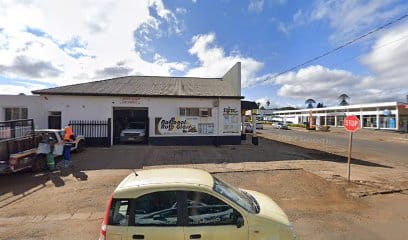
AutoZone Lydenburg is a Auto parts store establishment in Mashishing, Mpumalanga, South Africa
AutoZone Lydenburg (Mashishing) Auto Parts Store — Services and Customer Experience
AutoZone Lydenburg operates as part of South Africa’s leading auto parts retailer network, providing a broad selection of vehicle components and related products to motorists in Mashishing and the Mpumalanga region. While the Lydenburg shop shares its parent company’s emphasis on quality parts and reliable service, the emphasis for customers is practical access to essential components, quick turnarounds, and a straightforward shopping experience designed to keep vehicles on the road with minimal downtime.
Core offerings concentrate on vital auto parts designed to restore or maintain vehicle functionality. Customers typically find mechanical components such as brakes, filters, belts, electrical parts, cooling and heating items, as well as a range of consumables and accessories. The emphasis appears to be on parts that mechanics and do‑it‑yourself enthusiasts can source efficiently, with stock availability described by reviewers as a frequent advantage in evening and weekend shopping patterns. The store’s positioning as a trusted local supplier aligns with the broader AutoZone ethos of moving customers forward in their car journeys.
Typical job types in and around the Lydenburg store include assistance with identifying the correct part for a vehicle, locating or ordering stock, and handling exchanges when a wrong part is supplied. Visitor feedback highlights quick and friendly service as a common theme, with staff who are attentive to customer needs and capable of guiding purchase decisions. Several reviewers note the ability to source parts that meet within a short timeframe, sometimes within a day or two, suggesting a practical responsiveness to stock requests and customer timelines. Instances of successful price comparisons and lower pricing on certain items are also mentioned, contributing to a sense of value for money in routine purchases.
Requests typically follow a simple pattern characteristic of large auto parts networks: customers identify the needed component, staff check stock levels, and if necessary, an order is placed to obtain the item. When stock is unavailable on the shelf, the store appears prepared to source the component, sometimes from other locations or through supplier channels, to meet customer needs. Where appropriate, exchanges are handled without difficulty if the wrong item is provided, reflecting a service philosophy that prioritises customer satisfaction and practical problem-solving over rigid procedures. This approach mirrors the broader AutoZone service model, which emphasises efficiency, knowledgeability, and step‑by‑step support in vehicle repair and maintenance tasks.
Practical tips for customers visiting AutoZone Lydenburg include verifying that the part matches the vehicle’s make, model, and year before purchase, given the diversity of components carried. It is prudent to inquire about stock availability and potential alternative options or compatible parts if the exact item is not immediately on hand. Bringing the vehicle’s registration details or part number can expedite the identification process for staff. If a needed item is not in stock, asking about the expected lead time or the possibility of a quick stock check can help manage expectations. For those undertaking more complex repairs, consulting staff about compatible upgrades or recommended parts for specific operating conditions may prove beneficial, as staff familiarity with common vehicle models and procurement patterns can aid decision-making.
Location and accessibility information emphasise proximity and ease of access within the Mashishing area, with the broader store network described as well‑established across South Africa. While specific business hours for the Lydenburg store are not detailed in the available sources, the surrounding network’s responsiveness and the stated ability to source parts quickly imply typical retail hours aligned with customer demand, including after‑hours or weekend access where possible. Visitors should consult the store locator or promotional pages for the most up‑to‑date opening times and any local variations. In any event, AutoZone’s regional footprint suggests convenient access for residents and nearby communities seeking reliable auto parts and pragmatic service.
- Main services offered: auto parts retail, stock availability checks, order fulfilment, exchanges, and practical product guidance.
- Typical job types: parts identification, stock checks, sourcing items, handling exchanges, and customer advisory support.
- How requests usually work: customer requests identified, staff verify stock or place orders, items are supplied or sourced, and exchanges are processed if needed.
- Practical tips: confirm vehicle details and part compatibility, ask about alternatives if stock is unavailable, request lead times, and bring relevant part numbers or vehicle documents to speed up the process.
- Hours and location: local business hours may vary; use the store locator or promotions page to verify opening times; serves Mashishing and surrounding Mpumalanga communities.
Mashishing
Mpumalanga
South Africa

Sorry, no records were found. Please adjust your search criteria and try again.
Sorry, unable to load the Maps API.
Auto parts stores in Mashishing: services and practicalities
Auto parts stores in Mashishing, Mpumalanga, provide a range of goods and services designed to support motorists, commercial fleets and local workshops. The typical offering centres on maintaining, repairing and upgrading vehicles, with staff able to assist both the casual customer and the more experienced technician. The town’s geographic position means these outlets often balance availability with the need to source items suitable for a mix of on‑the‑road and agricultural use common to the region.
Customers can expect a broad selection of essential components and consumables. Core product ranges usually include replacement parts for popular passenger vehicles, light commercial vehicles, and classic models, alongside spares for farm and utility vehicles. Common lines feature brake components, filters, belts and hoses, ignition parts, air and fuel systems, cooling items, engine gaskets, and exhaust components. In addition, many outlets stock tyres, batteries, wipers, lubricants, specialised fluids, sealants and rust protection products, catering to routine maintenance and occasional repairs.
A significant portion of the service offer revolves around hands‑on support. Staff members typically help customers identify compatible parts by model, make and year, sometimes cross‑referencing parts to ensure correct fitment. While not every store carries every item in stock, they commonly offer ordering services and can arrange sourcing from regional suppliers to reduce delays. When items are unavailable, customers may be advised on suitable alternatives or the expected lead time for collection or delivery.
Fitting and other technical services are frequently available, either in‑store or via a partner workshop nearby. This can include changing batteries, fitting tyres, replacing brake components, and installing certain aftermarket accessories. For more complex tasks, retailers may recommend independent fits or workshop partners who specialise in mechanical repair, electrical diagnostics, or air‑conditioning services. In some cases, diagnostic tools and portable testing equipment are sold or demonstrated to assist with basic fault finding.
Practical considerations for shoppers include payment methods and accessibility. Most auto parts stores in Mashishing accommodate a range of payments, including cash and card transactions, with some locations offering credit facilities or loyalty programmes. The storefront is generally laid out to facilitate quick retrieval of commonly used parts, while larger, slower‑moving items may be available through an order counter or warehouse area. Customer service is typically aimed at efficiency and accuracy, especially when dealing with age‑related or vehicle‑specific compatibility questions.
Delivery and logistics are important for regional suppliers. Some stores provide local delivery within Mashishing or nearby towns, which can be a practical option for customers purchasing bulky parts or multiple items. For those who prefer to collect, clear pick‑up instructions and ready‑to‑collect notices are common, with staff ready to assist in loading where appropriate. It is prudent for customers to bring relevant vehicle details—such as make, model, year and engine type—to help ensure correct parts are retrieved or ordered.
Security, warranties and returns are standard considerations. Basic assurances on new parts and components are typically aligned with supplier policies, and customers may be advised on the appropriate use of parts with a view to maintaining vehicle safety and performance. Overall, auto parts stores in Mashishing aim to be a convenient local resource for everyday maintenance as well as more targeted repairs, balancing in‑store expertise with practical sourcing options to support the needs of the community.